



Frequently Asked Questions
When was HSS USA formed?
HSS USA was incorporated as a 501(c)(3) non-profit organization in 1989.
Who runs HSS USA?
HSS USA is a volunteer-based organization. Day-to-day activities are managed by a team of volunteer officers.
Who can be part of HSS USA?
Everyone who agrees with our mission and vision is welcome to join our activities. Our volunteers reflect the diversity of the Hindu American community.
How can I be part of HSS USA?
Please contact the local chapter coordinator here.
Is there a membership fee?
There is no membership fee. HSS USA receives voluntary contributions from its volunteers to manage its activities and programs across the United States.
What are the views of HSS USA on Hinduism, Hindu Dharma and Hindutva (Hinduness)?
Hinduism, also known as Hindu Dharma, is the modern name for the spiritual and cultural traditions that emanated from the Indian subcontinent. Based on universal and eternal principles, Hindu Dharma has inspired its practitioners toward noble conduct, created a harmonious society, and has risen to meet various challenges since the dawn of civilization. Hindutva (Hinduness) is simply the essence of being a Hindu, i.e., promoting Dharma and fostering peace.
What does the name HSS USA mean?
“Hindu Swayamsevak Sangh” means “Association of self-inspired Hindu American volunteers”.
- Hindu represents Hindu Americans
- Swayamsevak means self-inspired volunteer
- Sangh means association
Does HSS USA engage in political activism?
HSS USA does not participate in political activism.
Does HSS USA support a particular political ideology?
HSS USA does not support any political ideology. As per the HSS mission and vision, we work on educating the broader community on issues concerning Hindu Americans.
What are the views of HSS USA on the human rights situation of Hindus around the world?
Discrimination rationalized by religious laws, marginalization, and stigmatization in social life; violence and economic deprivation are all too common for Hindus living as a minority in several countries. Recent years have seen a growing number of Hindus seeking refuge due to persecution by state and non-state actors alike in those countries. Hindu women, in particular have borne the brunt of violence including kidnappings, rape, and forced conversions.
What are the views of HSS USA on Hinduphobia and attacks on Hindus?
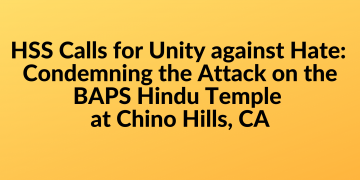
Any hostility to or prejudice against Hinduism, Hindu people, ethnic Indians, and Hindu Institutions is Hinduphobia. HSS USA is concerned about hate attacks on Hindu Americans, their institutions including businesses, and places of worship and even charitable work that the community is doing. HSS USA condemns any such attacks on individuals and organizations. The Hindu-American community, a religious minority, deserves safety and respect just like all other communities in America. We want to work with local, state, and federal governments to protect the constitutional rights of all Americans.
Is HSS USA connected to organizations across the globe?
HSS USA is an autonomous and independent organization having no legal or financial relationship with any other organization. We share platforms with many grassroots Hindu organizations across the world that work for the social and spiritual advancement of Hindus and the larger community and have been working for the upliftment of poor and underprivileged. HSS USA is also inspired by a long lineage of Hindu movements in India, including the Rashtriya Swayamsevak Sangh (RSS), which have helped rejuvenate the society and take Hindu civilization forward. HSS USA may not necessarily agree with all that these organizations and leaders espouse, but we take inspiration from their larger vision and the spirit for preserving, restoring, and advancing Hindu culture, ideals, and values.
Does HSS USA work with other communities and organizations in the US?
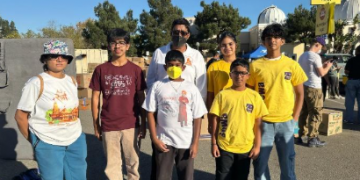
As an integral part of the American civil society, HSS USA proactively works towards building relationships with all sections of the society. We work with the community and humanitarian organizations to serve the needs of the larger American society. HSS also actively participates in interfaith activities and collaborates with other faith-based organizations on projects of common interest.